

What Is Boarding Up? Property Securing in Milton Keynes (MK)
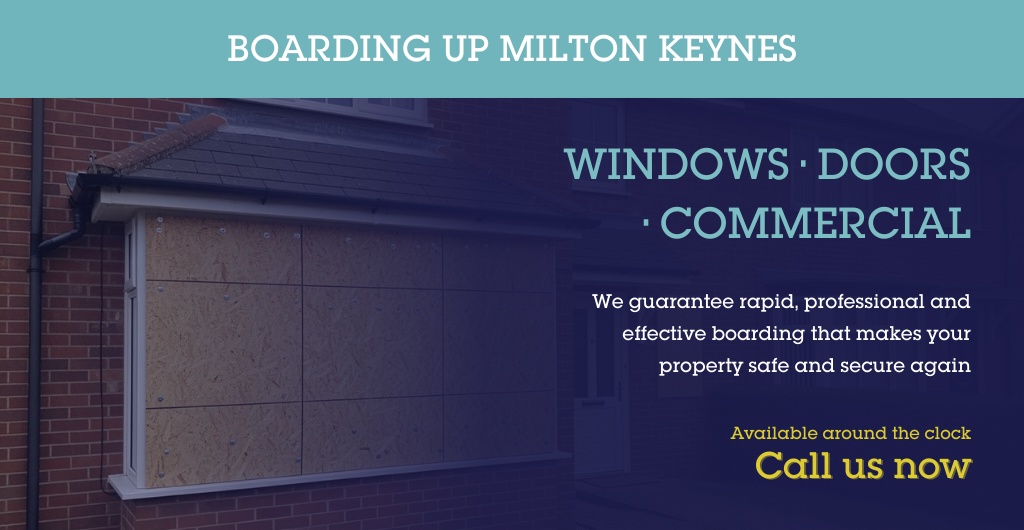
Boarding up is the process of securing a damaged or vulnerable opening—most commonly a window, door, shopfront, or rooflight—using purpose-fit boards or security panels until permanent repairs can be completed. It’s used after a break-in, a smashed window, storm damage, fire damage, or an accident impact, and it’s also a practical option for protecting vacant properties.
If you’re in Milton Keynes or the wider MK postcode area and you need to secure property quickly, boarding up is often the safest “make safe” step you can take to prevent further loss, weather damage, or repeat attempts to gain entry.
For urgent help, see our emergency boarding up page or call 01908 024 702.
When boarding up is needed (and when it isn’t)
Boarding up is appropriate whenever an opening can’t be properly locked or glazed straight away. Common triggers include:
- A smashed window after vandalism or an attempted break-in
- A forced or damaged entrance where you need to board up a door
- A shopfront incident where you need a shopfront boarded up overnight
- Storm debris or failed panes where temporary boarding prevents water ingress
- Post-fire situations where the building is structurally intact but needs to be secured (we secure access points—we don’t provide fire clean-up)
There are also times when full boarding isn’t necessary. For example, if a small pane can be safely taped and made secure from the inside until a glazier arrives the same day, boarding may be overkill. If you call us, we’ll talk through the situation and recommend the most sensible route.
If you’re dealing with a specific incident, you may find these situation guides helpful:
What boarding up actually does (benefits you can feel immediately)
Good boarding is not just “putting a sheet of wood over it”. Done properly, it:
- Prevents easy entry by covering the access point and using fixings that can’t be removed from outside
- Helps protect against weather and draughts, reducing further internal damage
- Reduces the risk of injury from broken glass and unstable frames
- Gives you breathing space to organise permanent repairs and insurance steps
- Helps demonstrate to insurers that you’ve taken reasonable steps to mitigate further loss
In Milton Keynes, many call-outs are time-sensitive because properties can be left unattended overnight (for example, after a late incident at a shop unit or when a landlord can’t get a new lock/glazing immediately). Boarding up is the practical “bridge” between the incident and the full repair.
What materials are used: plywood, OSB, and longer-term security options
The right material depends on the opening, exposure, and how long it needs to stay in place.
Plywood boarding (common for windows and shopfronts)
For most emergency window and door openings, we typically use 18mm exterior-grade plywood for strength and stability. Plywood holds fixings well and is less likely to deform if it’s exposed to damp conditions for a short period.
This is often the best choice when you need to board up a broken window or cover a large glazed opening.
Learn more on our window boarding in Milton Keynes page.
OSB boarding (useful for smaller openings and short-term making safe)
OSB (oriented strand board) can be suitable for smaller openings, internal boarding, or short-term use—often 12mm OSB where appropriate. It can be cost-effective, but it’s not always the best option in exposed areas or where higher security is needed.
We’ll choose the material based on the security risk, the size of the opening, and the condition of the surrounding frame.
Temporary steel doors (for damaged entrances and vacant properties)
Where a door has been forced and the frame is compromised, boarding alone may be less secure—especially if the property will be empty. In those cases, a temporary steel door can provide a stronger, lockable solution for medium-term security.
If this sounds like what you need, start with our door boarding service page (we’ll advise whether boarding or a temporary steel door is the better fit).
Security screens (for longer-term void protection)
For vacant or repeatedly targeted buildings, steel security screens (often used on ground-floor windows and doors) can be a better long-term strategy than repeated timber boarding.
If you manage empty properties, see vacant property boarding and security.
How boarding up is fitted (what “properly secured” means)
The method matters. Boarding that’s easy to pull off can make the situation worse by advertising that the property is vulnerable.
A typical professional boarding approach may involve:
-
Site assessment and safety checks
We check for unstable glass, sharp edges, loose frames, and any overhead risks (especially with rooflights or upper floors). -
Measuring and cutting to fit
Boards are cut to cover the opening with appropriate overlap, allowing for secure fixing points. -
Fixing method chosen for the surface and condition
- Anti-tamper fixings where the board must not be removable from outside
- Internal bracing or through-bolting methods where suitable
- Non-destructive options where the frame is sound and preservation matters
-
Weather and access considerations
If the opening is exposed, we consider how best to reduce rain ingress and draughts while keeping the property secure. -
Final check and handover
We confirm the opening is secure, explain what’s been done, and outline next steps for glazing/repairs.
If the frame or surrounding structure is too damaged for non-destructive methods, we’ll explain the options before proceeding. The priority is always to make safe and secure property without causing unnecessary extra damage.
What to expect when you call us (Milton Keynes & MK postcodes)
When you contact Boarding Up Milton Keynes, we’ll ask a few practical questions so we can attend prepared:
- What’s happened (break-in, accident, storm, etc.)
- What needs securing (window, door, shopfront, rooflight)
- Property type (residential, commercial, vacant)
- Whether police or emergency services have attended (if relevant)
- Any access issues (rear entry, shutters, shared stairwells, gated areas)
We don’t promise fixed arrival times because traffic, workload, and the severity of other incidents can affect attendance—especially out of hours. But we prioritise urgent calls and will give you a realistic ETA on the phone.
For immediate assistance, use our 24/7 emergency boarding up in Milton Keynes page or call 01908 024 702.
Is boarding up covered by insurance?
In many cases, insurers expect you to take reasonable steps to prevent further damage or theft. Boarding up is commonly treated as an emergency mitigation measure—however, cover varies by policy and circumstances.
Practical tips that usually help:
- Take photos of the damage if it’s safe
- Keep any police reference number (if applicable)
- Avoid clearing up glass if it could compromise evidence (follow police advice)
- Keep invoices and a short description of works completed
We’re not loss adjusters and can’t approve claims, but we can provide documentation insurers typically ask for (for example, itemised invoices and a work statement). For more detail, read our insurance claims guidance page.
How long can boarding stay up?
Boarding is designed as a temporary security measure, but “temporary” can mean different durations depending on your situation:
- Short-term (same day to a few days): waiting for a glazier or replacement door
- Medium-term (weeks): ongoing investigation, probate, void periods, supply delays
- Longer-term: better handled with steel doors or security screens rather than repeated timber boarding
If the property will be empty, tell us when you call—there may be a more secure option than basic temporary boarding.
Boarding up for different property types in MK
Boarding isn’t one-size-fits-all. The approach changes depending on how the building is used.
-
Homes and flats: prioritise safety, privacy, and preventing repeat access
See residential boarding up. -
Shops and commercial sites: larger panes, public-facing security, and often an urgent need to trade again quickly
See shopfront boarding and commercial boarding up. -
Void or vacant properties: focus on stronger, longer-term security and deterrence
See vacant property security and boarding.
FAQs: What is boarding up?
Do I need boarding up or can I just tape the broken glass?
If the opening can still be locked and the glass is stable, a very short-term measure may be possible. But if there’s a hole, shattered pane, or a frame that won’t secure, boarding up is usually the safest option—especially overnight or out of hours.
What’s the difference between window boarding and shopfront boarding?
The principle is the same, but shopfronts often involve larger glazed areas, higher public visibility, and a greater risk of repeat attempts. Fixings, panel size, and access planning can differ. See shopfront boarding for specifics.
Can you board up a door after a break-in?
Yes. If the door or frame is damaged, we can board up a door to prevent entry. In some cases, a temporary steel door is a better medium-term solution—particularly for empty buildings. Start here: door boarding.
Will boarding up stop rain coming in?
It significantly reduces exposure, but no temporary system is a perfect substitute for proper glazing/repairs—especially in wind-driven rain. Our goal is to secure the opening and limit further damage until permanent works are completed.
Do you remove the boards later?
We can advise on the next steps and, where arranged, return when glazing or repairs are ready. If you’re planning ahead (for example, a void property), it may be worth discussing longer-term options rather than repeated boarding.
Is boarding up always timber?
Not always. Timber (plywood/OSB) is common for emergency attendance, but we also install options such as temporary steel doors for better security where appropriate. The right choice depends on risk, duration, and the condition of the opening.
Ready to secure your property?
If you need temporary boarding or you’ve got a smashed window that can’t wait, we can help across Milton Keynes and the MK postcode districts.
Ready to get started? Call 01908 024 702 or email us for a free, no-obligation quote.
